The Origins Of Prediction Markets
The concept behind prediction markets is significantly older than modern cryptocurrency platforms or decentralized finance applications. Economists, political analysts, and financial researchers have studied market-based forecasting systems for decades because markets often aggregate information more efficiently than isolated expert opinions.
Early forms of prediction markets appeared long before blockchain technology existed. Historical records show that informal election betting markets operated in the United States during the late nineteenth and early twentieth centuries. In some cases, these markets generated probability estimates that were surprisingly close to actual election outcomes.
The underlying idea is relatively simple. When participants risk money on future outcomes, they are incentivized to process information carefully. This creates an environment where prices become reflections of collective expectations.
During the 1980s and 1990s, academic institutions began experimenting with structured forecasting systems. One of the most well-known examples was the Iowa Electronic Markets project, which demonstrated that market-based forecasting models could outperform certain traditional polling methods under specific conditions.
As internet technologies evolved, prediction markets expanded beyond academic research environments into public online platforms. The emergence of cryptocurrencies and decentralized blockchain networks accelerated this trend even further by enabling global participation without relying entirely on traditional banking systems.
Today, prediction markets exist at the intersection of finance, economics, information theory, behavioral psychology, game theory, decentralized technology, and online trading infrastructure.
Why Prediction Markets Became Popular
Several major technological and cultural shifts contributed to the rapid growth of prediction markets over the last decade.
First, online communities became increasingly interested in alternative financial systems outside traditional banking structures. The rise of cryptocurrency ecosystems introduced millions of users to decentralized applications, tokenized assets, and blockchain-based financial experimentation.
Second, trust in traditional media forecasting and polling systems declined in many regions. High-profile political events and unexpected market outcomes caused many people to question whether conventional forecasting methods accurately reflected real-world probabilities.
Prediction markets offered an alternative approach. Instead of relying solely on expert commentary or opinion polling, these systems allowed users to express beliefs financially through trading activity.
Third, social media dramatically accelerated information flow. Market participants could react to breaking news instantly, causing probabilities to update in real time. This dynamic created highly responsive forecasting systems capable of adjusting faster than many traditional analytical institutions.
Finally, decentralized finance infrastructure lowered technical barriers for participation. Crypto wallets, stablecoins, blockchain networks, and smart contracts made it easier for global users to access forecasting platforms without requiring conventional brokerage accounts.
These factors combined to create an entirely new category of online financial and information platforms.
Core Mechanics Behind Prediction Markets
At their core, prediction markets operate through market-driven probability discovery.
Every contract represents a possible future event. Participants buy or sell contracts depending on whether they believe the market is underestimating or overestimating the likelihood of a particular outcome.
In most modern platforms, contracts settle between zero and one dollar.
For example:
- A contract trading at $0.20 implies a 20% probability.
- A contract trading at $0.75 implies a 75% probability.
- A contract trading at $0.95 suggests near-certainty.
If the predicted event occurs, holders of winning contracts receive the maximum payout. If the event fails to occur, losing contracts expire worthless.
This structure creates powerful incentives for accurate forecasting because traders profit when they correctly identify pricing inefficiencies.
Market prices continuously fluctuate based on:
- Breaking news
- Social sentiment
- Economic data
- Political developments
- Public announcements
- Liquidity changes
- Trading volume
Unlike static polling systems, prediction markets are dynamic and constantly evolving.
Understanding Market Liquidity
Liquidity is one of the most important concepts in prediction markets.
Liquidity refers to how easily participants can buy or sell contracts without significantly affecting market prices.
Highly liquid markets generally produce:
- More stable pricing
- Tighter spreads
- Better forecasting accuracy
- Faster market reactions
Low liquidity markets may experience:
- Higher volatility
- Manipulation risks
- Poor price discovery
- Slower execution
Some decentralized prediction platforms use automated market maker systems to provide baseline liquidity. Others rely on traditional order book models where buyers and sellers match trades directly.
The quality of liquidity often determines whether a prediction market becomes trustworthy and sustainable over time.
The Role Of Crowd Intelligence
One of the most fascinating aspects of prediction markets is the concept of collective intelligence.
The theory behind crowd intelligence suggests that large groups of individuals can collectively produce highly accurate forecasts when incentives are properly aligned.
In prediction markets, participants contribute information from diverse backgrounds:
- Political analysts
- Sports experts
- Economists
- Cryptocurrency traders
- Journalists
- Industry insiders
- Retail users
Each participant processes information differently. Through market activity, these perspectives combine into continuously updated probability estimates.
Many researchers believe this decentralized information aggregation process can outperform isolated expert forecasting under certain conditions.
However, prediction markets are not perfect. Crowd psychology, misinformation, emotional behavior, and herd mentality can still influence pricing dynamics.

Political Prediction Markets
Political forecasting remains one of the most popular sectors within prediction markets.
Election-related markets attract enormous attention because political events generate constant news cycles, public engagement, and measurable outcomes.
Common political markets include:
- Presidential election winners
- Parliamentary outcomes
- Approval ratings
- Party control forecasts
- Candidate nomination predictions
- Cabinet appointments
Political prediction markets often react to:
- Debate performances
- Polling releases
- Economic indicators
- Scandals
- Legislative developments
- International events
During major election cycles, some prediction platforms process hundreds of millions of dollars in trading volume.
These markets have become increasingly influential among journalists, analysts, political researchers, and online communities seeking real-time sentiment indicators.
Cryptocurrency Prediction Markets
Cryptocurrency-focused prediction markets have grown rapidly because digital asset communities naturally overlap with decentralized finance ecosystems.
Popular crypto prediction topics include:
- Bitcoin price targets
- Ethereum ETF approvals
- Token launches
- Regulatory announcements
- Blockchain upgrades
- Exchange listings
- Stablecoin adoption
Crypto communities are highly active online, which creates ideal conditions for fast-moving information markets.
Because cryptocurrency prices already exhibit significant volatility, prediction markets built around crypto events often experience extremely rapid probability fluctuations.
This environment attracts traders seeking:
- Speculative opportunities
- Market sentiment analysis
- Event-driven trading strategies
- Portfolio hedging
Decentralized infrastructure also enables global participation without requiring conventional brokerage systems.
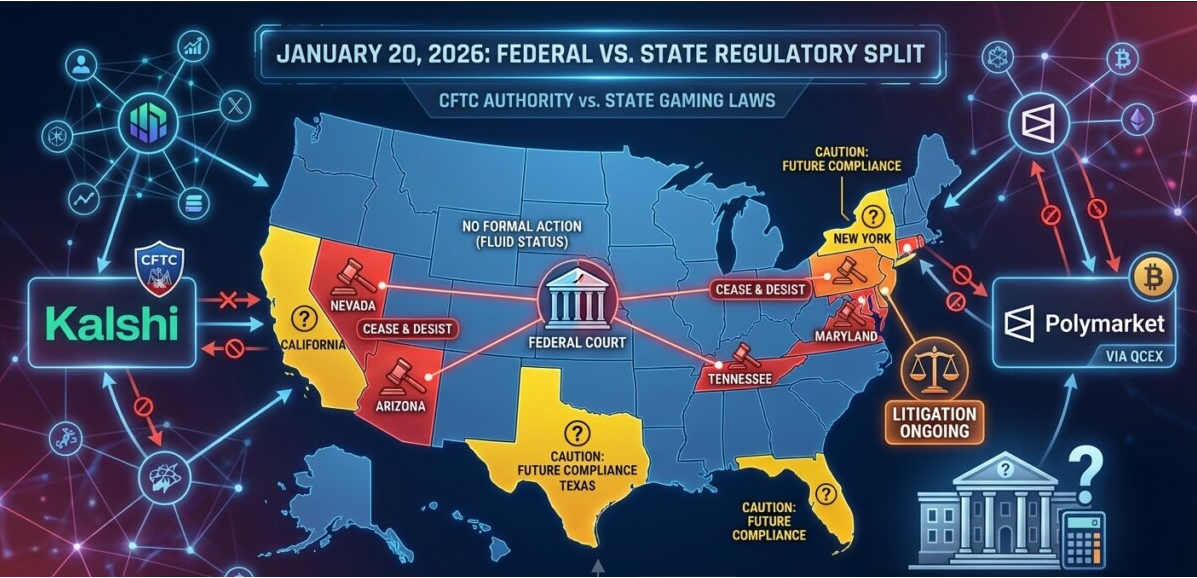
Are prediction markets legal?
Legality depends on your country and local regulations. Some platforms operate under regulated financial frameworks, while decentralized platforms may face restrictions in certain jurisdictions.
Are prediction markets gambling?
Prediction markets share similarities with betting systems, but many platforms position themselves as forecasting or financial information markets rather than traditional gambling services.
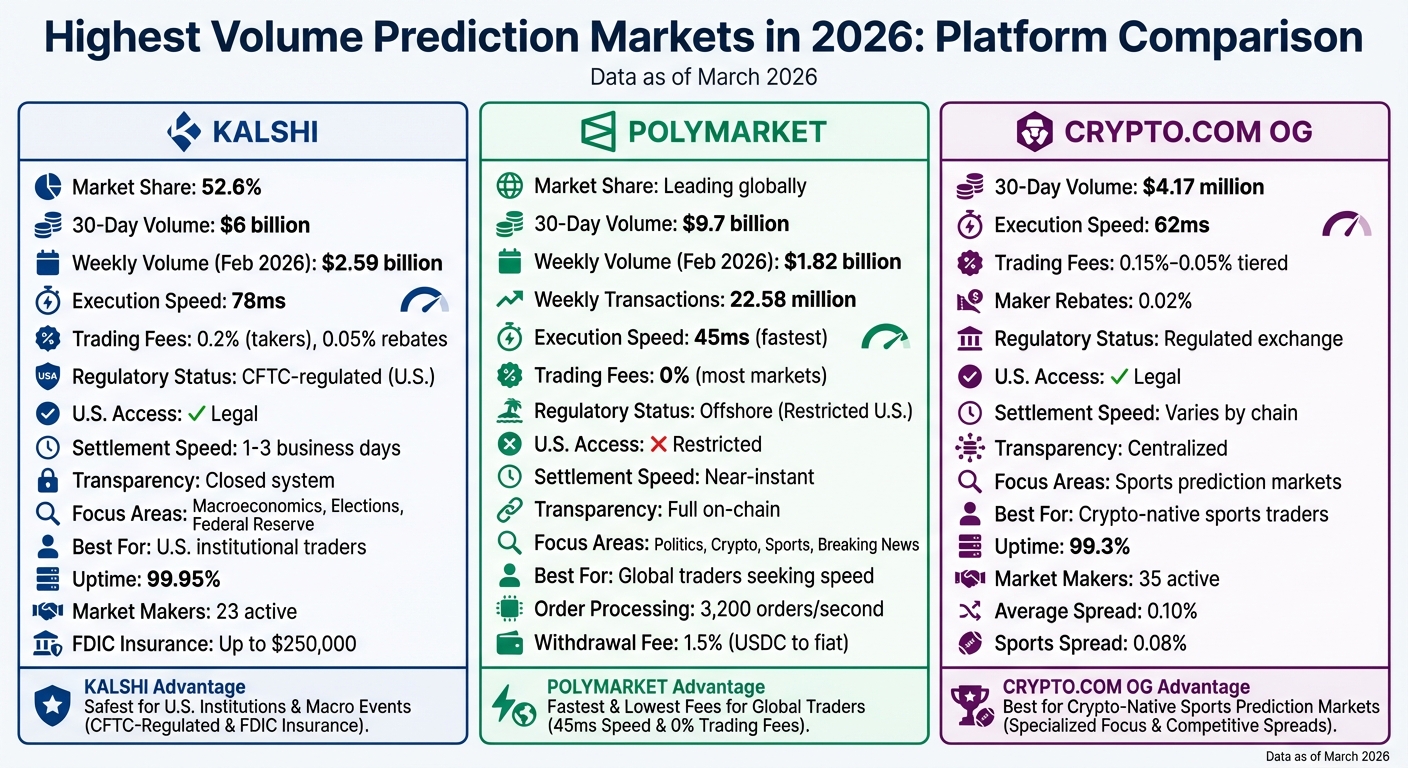
What is the biggest prediction market platform?
Polymarket is currently one of the most recognized decentralized prediction market platforms, especially within crypto and political forecasting communities.
Can you make money with prediction markets?
Some users profit from accurate forecasting and trading strategies, but prediction markets involve significant risk and should not be treated as guaranteed investment opportunities.